


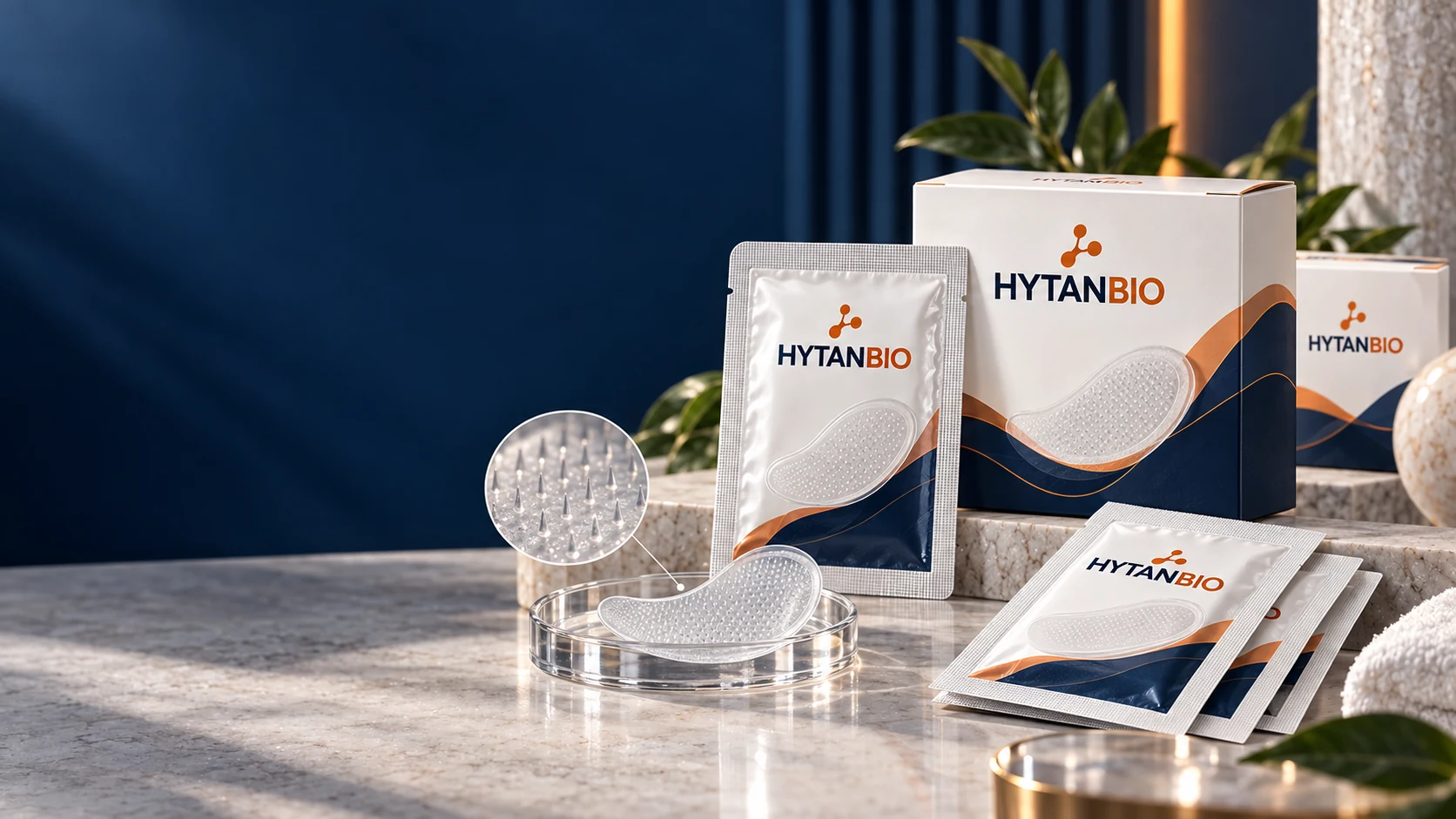
How to Protect Peptide Activity in Microneedle Production
Why temperature, moisture, oxygen, matrix chemistry, time and packaging must be managed together.
Read guide →
Practical articles for brands comparing suppliers, formulas, molds, product formats, quality controls, packaging, MOQ, lead time and market-readiness.
Slide 1 of 6
The fastest way to use this library is to begin with the decision that is blocking the project. The answers below lead to focused pages about supplier verification, order-unit logic, customization, quality evidence, market classification and pharmaceutical boundaries. Each destination states a conclusion before its conditions, lists the data needed for a project-specific answer and links to the next related decision. Fixed MOQ, timing, capacity, efficacy or compliance claims are not inferred when the approved formula, patch, packaging or market is unknown. This structure helps brand teams compare evidence on one basis and helps search and AI systems preserve essential limitations when summarizing a page. Buyers should record the exact product and document version behind every conclusion, because a later formula, claim, tool, site or packaging change may invalidate the earlier answer.
Why temperature, moisture, oxygen, matrix chemistry, time and packaging must be managed together.
Read guide →
What determines MOQ, sample timing, pilot scope and mass-production lead time.
Read guide →How needle geometry, array density, backing shape and manufacturability influence an OEM program.
Read guide →
A buyer-focused overview of safety assessment, materials, claims, irritation testing and market responsibility.
Read guide →How brands should evaluate peptide concepts, compatibility, processing and compliant cosmetic positioning.
Read guide →A practical buyer roadmap from market definition to supplier qualification, samples, packaging and launch.
Read guide →A patch can leave its protective support bent, inverted or partly attached to a liner. Observe how intended users identify the array, remove the correct layers and handle the product before approving the retail presentation and instructions.
A reorder decision depends on sellable stock, confirmed commitments and the time until usable replenishment arrives. Compare demand scenarios and artwork changes before accepting a larger microneedle order simply because its quoted unit price is lower.
A family of retail SKUs may share a patch, or it may hide changes in formula, shape, backing or use. Build a variant matrix that shows which existing evidence applies and where a technical reviewer needs additional information.
Owning a mold does not establish that another factory can reproduce the approved patch. Review usable files, material definitions, tool condition and access rights before moving the project, then define how the receiving manufacturer's first output will be assessed.